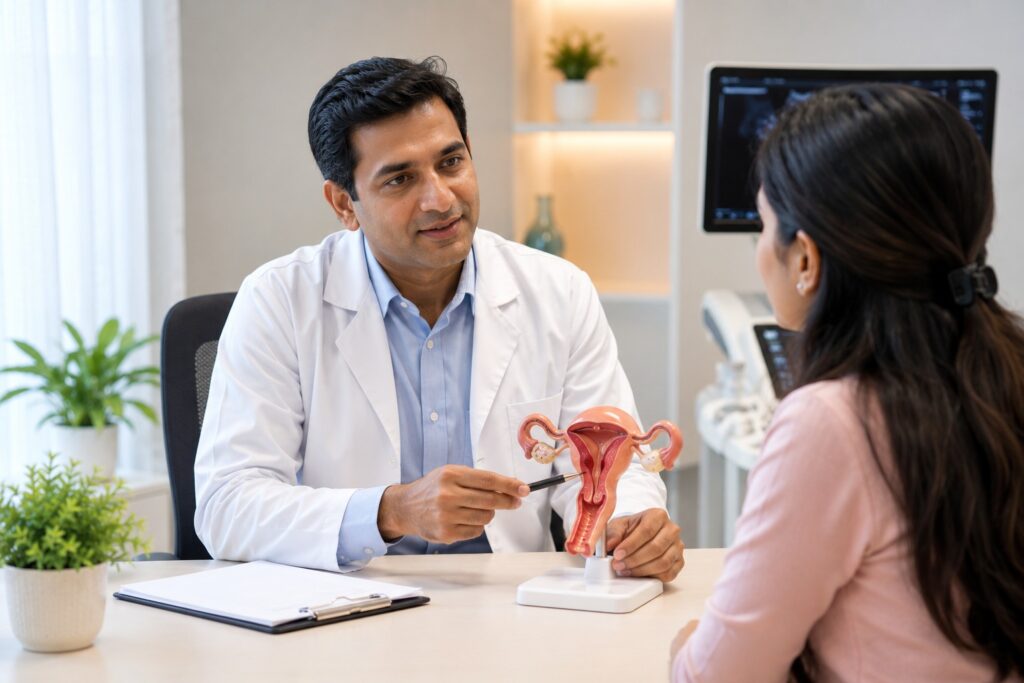

Fibroids, Cysts, Contraception and Surgery: A Plain-Language Guide to Common Gynae Questions in Pimple Saudagar
Words like fibroid, endometriosis or hysterectomy can sound frightening, especially when they appear on a scan report with no explanation. Many women leave a consultation with more questions than answers, or avoid going at all because they are afraid of what they might hear. In reality, most gynecological conditions are common, well understood and very treatable.
This guide explains the conditions women ask about most, compares contraception options, clarifies when surgery is really needed and shows what to expect during an examination. It also covers what to look for in the Best Gynaecologist in Pimple Saudagar, so you can walk into your appointment calm and well prepared.
Common Conditions, Explained Simply
Fibroids
Non-cancerous growths in the muscle of the uterus. Many cause no symptoms, but some lead to heavy periods, pelvic pressure or frequent urination.
Treatment: monitoring, medication or surgery, depending on size, symptoms and plans for pregnancy.
Endometriosis
Tissue similar to the uterine lining grows outside the uterus, causing painful periods, pain during intercourse and sometimes difficulty conceiving.
Treatment: pain relief, hormonal therapy and, when needed, keyhole surgery.
Ovarian cysts
Fluid-filled sacs on the ovary. Most are harmless and disappear on their own, but large or persistent ones need follow-up scans.
Treatment: watchful waiting, medication or removal; sudden severe pain needs urgent care.
PCOS
A hormonal condition marked by irregular periods, acne, excess facial or body hair and weight gain.
Treatment: lifestyle changes first, with medication to regulate cycles or support ovulation as needed.
Recurrent infections
Repeated vaginal or urinary infections often have a trigger such as hormones, hygiene products or an untreated partner.
Treatment: a correct diagnosis, a full course of the right medicine and fixing the underlying trigger.
Contraception Options at a Glance
Choosing contraception is a personal decision. This comparison is a starting point for the conversation with your doctor:
| Method | How it works | Good to know |
|---|---|---|
| Condoms | Barrier method | Also reduce the risk of infections; effective only when used correctly every time |
| Oral contraceptive pills | Hormones prevent ovulation | Need to be taken daily; can regulate periods; not suitable for everyone, so get advice first |
| Injectable contraceptive | Hormone injection | Given every three months; periods may change |
| Copper IUD (Copper T) | Small device in the uterus, no hormones | Long-acting and highly effective; periods may be heavier at first |
| Hormonal IUD | Device releasing a small amount of hormone | Long-acting; often lightens heavy periods |
| Permanent methods | Tubal ligation or male vasectomy | Meant for those certain they want no more children |
| Emergency contraception | Pill taken after unprotected intercourse | Works best when taken as soon as possible, ideally within 72 hours; not meant for regular use |
When Is Surgery Really Needed?
Most gynecological problems begin with medication, monitoring and lifestyle changes. Surgery is considered when symptoms persist despite treatment, when a growth poses a risk or is affecting your quality of life, or when other options are not suitable.
When surgery is advised, keyhole (laparoscopic) techniques use small incisions, which generally means less pain, a shorter hospital stay and quicker recovery than open surgery. Not every case can be done this way, and your surgeon will explain which approach suits you.
Before agreeing to any procedure, ask:
- Why is this recommended, and what are the alternatives?
- What happens if I wait or choose medication first?
- How will it affect my periods, hormones and future pregnancies?
- What is the recovery time, and when can I return to work?
- Are you comfortable with me taking a second opinion?
Nutrition for Hormonal and Reproductive Health
Anaemia is very common among women, particularly those with heavy periods or restricted diets, and it quietly drains energy, concentration and mood. Small food habits make a visible difference:
- Iron: leafy greens, pulses, jaggery, dates and, for non-vegetarians, eggs and meat, ideally with a vitamin C source such as lemon or amla.
- Calcium and vitamin D: milk, curd, paneer, ragi and safe morning sunlight for strong bones.
- Vitamin B12: worth checking in vegetarians, as it is found mainly in animal foods.
- Balance: regular meals, enough protein and fibre, and less packaged and sugary food help hormones and weight.
- Supplements: take them based on blood tests and your doctor’s advice, not guesswork.
What Happens During a Pelvic Exam or Pap Smear?
Fear of the examination keeps many women from getting checked, so it helps to know what to expect:
- It takes only a few minutes, and the doctor explains each step as it happens.
- You can ask for a female attendant to be present and ask to stop at any time.
- You may feel pressure or mild discomfort, but it should not be severely painful.
- For a Pap smear, avoid douching and intercourse for about a day beforehand and book it when you are not bleeding heavily.
Emergency Signs: Do Not Wait for an Appointment
- Sudden, severe lower abdominal pain
- Bleeding that soaks a pad every hour for two hours or more, or comes with dizziness or fainting
- Fever with pelvic pain or foul-smelling discharge
- Pain on one side of the abdomen with bleeding when you may be pregnant
- Any bleeding in pregnancy or after menopause
How to Choose the Best Gynaecologist in Pimple Saudagar
A good gynaecologist is as much about trust as technical skill. These qualities are worth looking for:
- Respect and privacy: sensitive topics are handled without judgement or embarrassment.
- Conservative first approach: medication and monitoring are tried before surgery whenever it is safe to do so.
- Minimally invasive options: keyhole techniques are offered where they are appropriate.
- Clear explanations: you understand your diagnosis, your options and the reasoning behind the advice.
- Transparency: honest discussion of costs, risks, recovery and follow-up.
Why Patients Trust Dr. Avinash Phadnis
Dr. Avinash Phadnis is known for patient, unhurried consultations where each woman’s concerns are heard fully and explained in simple language. Treatment options are presented with their benefits and limits, and decisions are made together, whether the need is a routine checkup, long-term management of a condition or a procedure.
Women who travel across the twin cities for specialist care often describe the practice as a reassuring, judgement-free space, and many look to it as the Best Gynaecologist in PCMC for honest advice and continuity of care.
Final Takeaway
Understanding your body removes much of the fear around gynecological care. Know the warning signs, ask questions about every treatment, never hesitate to seek a second opinion and choose a doctor who makes you feel heard.
When you are ready to book a consultation, reach out to a trusted Gynecologist in PCMC and take the next step towards better health.
Book Your Consultation with Dr. Avinash Phadnis
Book AppointmentFrequently Asked Questions
Is a pelvic exam painful?
It should not be. Most women feel mild pressure or brief discomfort for a few minutes. You can ask the doctor to pause or stop at any time, and relaxing your muscles and breathing slowly make it easier.
Which contraception method is best for me?
There is no single best method. The right choice depends on your age, health, how soon you want a pregnancy, how regular you are with daily routines and whether you also need protection from infections. A gynecologist can help you compare options.
Do fibroids always need surgery?
No. Many fibroids cause no symptoms and only need monitoring. Treatment is considered when they cause heavy bleeding, pain, pressure symptoms or fertility problems, and ranges from medication to surgery.
Are ovarian cysts dangerous?
Most ovarian cysts are harmless and settle on their own. Large, persistent or complex cysts need monitoring or treatment, and sudden severe pain needs urgent medical care.
Can endometriosis be managed?
Endometriosis is a long-term condition, but symptoms can be controlled with pain relief, hormonal treatment and, when needed, surgery. Many women live comfortably with the right care.
How long is recovery after laparoscopic surgery?
Recovery depends on the procedure, but keyhole surgery usually means a shorter hospital stay and a return to routine activity in days to a couple of weeks. Your surgeon will give specific advice.
How do I know if I am anaemic?
Tiredness, paleness, breathlessness, dizziness and hair fall can be signs, especially with heavy periods. A simple haemoglobin blood test confirms it, and treatment is usually straightforward.
Can I have a Pap smear during my period?
It is better to schedule it after your bleeding has stopped, as heavy flow can affect the sample. Light spotting is usually not a problem, but check with your clinic when booking.
How can I book an appointment with Dr. Avinash Phadnis?
Use the Book Appointment button above to open the clinic’s Google Business profile, where you can call or get directions and choose a convenient time.