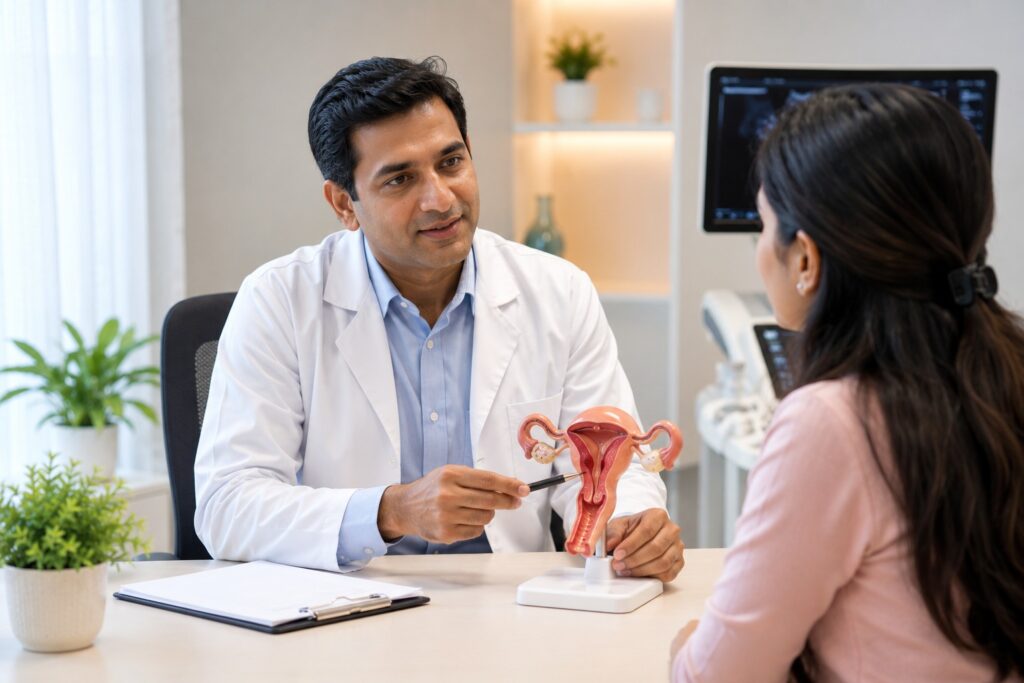

Few words frighten women as much as “cancer”, and that fear often leads to avoidance. A lump is ignored, unusual bleeding is explained away, and a Pap smear is postponed for years. Yet the truth is encouraging: cancers of the cervix, breast, ovary and uterus are far more treatable when found early, and cervical cancer in particular is largely preventable through vaccination and regular screening.
This guide explains the signs worth acting on, which screening tests are recommended and when, what an abnormal result really means and how to lower your risk. It also shows you what to look for in the Best Gynaecologist in Pimple Saudagar, so that knowledge turns into action rather than anxiety.
Four Cancers Every Woman Should Know About
Cervical cancer
Caused by long-lasting infection with high-risk HPV types and usually developing over many years, which gives screening time to catch changes early.
Watch for: bleeding after intercourse or between periods, unusual discharge, pelvic pain.
Breast cancer
One of the most common cancers in women. Most breast lumps turn out to be benign, but every new lump deserves an examination.
Watch for: a lump, skin dimpling, nipple discharge or retraction, a change in breast shape.
Ovarian cancer
Often silent in early stages, which is why knowing the subtle symptoms matters. There is no reliable routine screening test for women at average risk.
Watch for: persistent bloating, pelvic or abdominal pain, feeling full quickly, frequent urination.
Uterine (endometrial) cancer
Most often detected early because it causes abnormal bleeding, especially after menopause.
Watch for: bleeding after menopause, very heavy or irregular bleeding, bleeding between periods.
Prevention You Can Start Today
- Get the HPV vaccine: it protects against the virus types behind most cervical cancers and works best when given before exposure.
- Do not skip screening: Pap or HPV tests find changes years before they could become cancer.
- Avoid tobacco in every form: smoking and chewing tobacco raise the risk of cervical and other cancers.
- Keep a healthy weight and stay active: excess weight raises the risk of breast and uterine cancer after menopause.
- Limit alcohol: even moderate drinking is linked to a higher breast cancer risk.
- Breastfeed if you can: it slightly lowers the risk of breast and ovarian cancer.
- Practise safe sex: barrier protection lowers the risk of HPV and other infections.
Screening at a Glance
Your doctor will tailor this to your age, history and risk, but these are the usual recommendations:
| Test | Who | How often |
|---|---|---|
| Pap smear or HPV test | Women from their mid-twenties to 30 until around 65, as advised | Pap about every 3 years, HPV test about every 5 years |
| Breast self-awareness | All women from their twenties | Monthly look and feel, reporting any change |
| Clinical breast examination | Women from their late twenties or thirties | As advised, often yearly |
| Mammogram | Usually from around 40, earlier with a family history | Every 1 to 2 years, as advised |
| Pelvic ultrasound | Any woman with symptoms such as bloating, pain or abnormal bleeding | When symptoms occur, not as a routine screen |
Symptoms Not to Ignore (And Why Most Are Not Cancer)
Please remember that these symptoms usually have benign causes. The point is not to panic, but to get checked promptly.
| Symptom | Common benign causes | What to do |
|---|---|---|
| Bleeding after intercourse or between periods | Infection, cervical polyps, hormonal changes | Get examined and screened |
| Any bleeding after menopause | Vaginal dryness, polyps, thickened lining | Always have it checked promptly |
| A new breast lump | Cysts, fibroadenomas, hormonal changes | Clinical exam, then ultrasound or mammogram as advised |
| Persistent bloating or feeling full quickly | Digestive problems, ovarian cysts | See a doctor if it lasts more than a few weeks |
| Unusual or foul-smelling discharge | Vaginal or cervical infection | Get a diagnosis rather than self-medicating |
Know Your Family History
Most women who develop these cancers have no family history, but some inherited gene changes raise risk. Mention to your doctor if you have:
- Breast or ovarian cancer in a mother, sister or daughter, especially at a young age
- Several relatives with breast, ovarian, uterine or bowel cancer
- A relative with cancer in both breasts, or breast cancer in a male relative
In such families, earlier or more frequent screening and genetic counselling may be advised.
What If a Test Comes Back Abnormal?
An abnormal result is a signal to look closer, not a diagnosis. For an abnormal Pap smear, the usual path is calm and step-by-step:
- Repeat or add an HPV test: many minor changes settle on their own.
- Colposcopy: the doctor examines the cervix with a magnifying instrument, which is a short outpatient procedure.
- Biopsy if needed: a tiny tissue sample confirms what the changes are.
- Treatment of precancerous changes: removing or destroying abnormal cells prevents cancer from developing.
Similarly, a breast lump is assessed with an examination, imaging and, when necessary, a needle biopsy, and most turn out to be harmless.
Fears and Myths, Answered
Myth: “No one in my family had cancer, so I am safe.”
Fact: Most women who develop these cancers have no family history, so screening is for everyone.
Myth: “A Pap smear is painful and embarrassing.”
Fact: It takes a few minutes, is usually only mildly uncomfortable and can be done with privacy and respect.
Myth: “Cancer always means a death sentence.”
Fact: When found early, many of these cancers are highly treatable, and precancerous changes can be removed before cancer begins.
Myth: “The HPV vaccine is only for girls who are already sexually active.”
Fact: It works best before any exposure, which is why it is usually given in early adolescence.
How to Choose the Best Gynaecologist in Pimple Saudagar
For screening and sensitive concerns, comfort and trust are essential. Look for a doctor who:
- Explains each test before doing it: so there are no surprises, and you can ask for a female attendant.
- Personalises screening: based on your age, family history and risk, not a one-size-fits-all checklist.
- Communicates results clearly: and tells you exactly what happens next if something needs follow-up.
- Offers a complete pathway: examination, colposcopy or referral for imaging and breast care without delays.
- Respects your privacy and your fears: and never makes you feel embarrassed for asking.
Why Patients Trust Dr. Avinash Phadnis
Dr. Avinash Phadnis is known for patient, unhurried consultations in which fears are heard and explained rather than dismissed. Screening tests and examinations are carried out with privacy and respect, results are explained in plain language, and any follow-up is planned clearly so that patients are never left waiting anxiously for answers.
His practice supports women at every stage of life, from adolescence and pregnancy to menopause and beyond, so patients benefit from a doctor who already knows their history. It is this calm, thorough and personal approach that leads many families across the twin cities to call him the Best Gynaecologist in PCMC for honest, dependable care.
Final Takeaway
Knowledge is the strongest protection. Get vaccinated against HPV when it is advised, keep your Pap and breast screening up to date, know your family history and act early on any change in your body. Most of the time the answer will be reassuring, and when it is not, early action makes all the difference.
To book a screening or discuss a concern, consult a trusted Gynecologist in PCMC and take a confident step towards protecting your health.
Book Your Consultation with Dr. Avinash Phadnis
Book AppointmentFrequently Asked Questions
What is the HPV vaccine and who should get it?
The HPV vaccine protects against the virus types that cause most cervical cancers. It is usually recommended for girls aged 9 to 14, ideally before any sexual exposure, with catch-up vaccination for older girls and women as advised by a doctor.
How often should I have a Pap smear?
Pap tests are commonly repeated every three years and HPV tests every five years for women in the screening age range. Your doctor will advise a schedule based on your age, previous results and risk factors.
Is a Pap smear painful?
It takes only a few minutes and is usually mildly uncomfortable rather than painful. Relaxing your muscles and telling your doctor if you feel any pain makes the test easier.
Does an abnormal Pap smear mean I have cancer?
No. Most abnormal results show minor cell changes or infection. Your doctor may repeat the test, check for HPV or examine the cervix more closely. Precancerous changes can be treated before they become cancer.
Can cervical cancer be prevented?
To a large extent, yes. HPV vaccination, regular screening, avoiding tobacco and treating precancerous changes early can prevent most cervical cancers.
What are the early signs of ovarian cancer?
Signs are often vague and include persistent bloating, abdominal or pelvic pain, feeling full quickly and needing to pass urine often. Symptoms that are new and last more than a few weeks should be checked by a doctor.
When should I start mammograms?
Mammography is usually advised from around 40, and earlier if you have a strong family history of breast or ovarian cancer. Your doctor will recommend how often to repeat it.
Is breast pain a sign of cancer?
Usually not. Most breast pain is linked to hormonal changes in the menstrual cycle. A new lump, skin dimpling, nipple discharge or pain that stays in one spot should be examined.
How can I book an appointment with Dr. Avinash Phadnis?
Use the Book Appointment button above to open the clinic’s Google Business profile, where you can call or get directions and choose a convenient time.