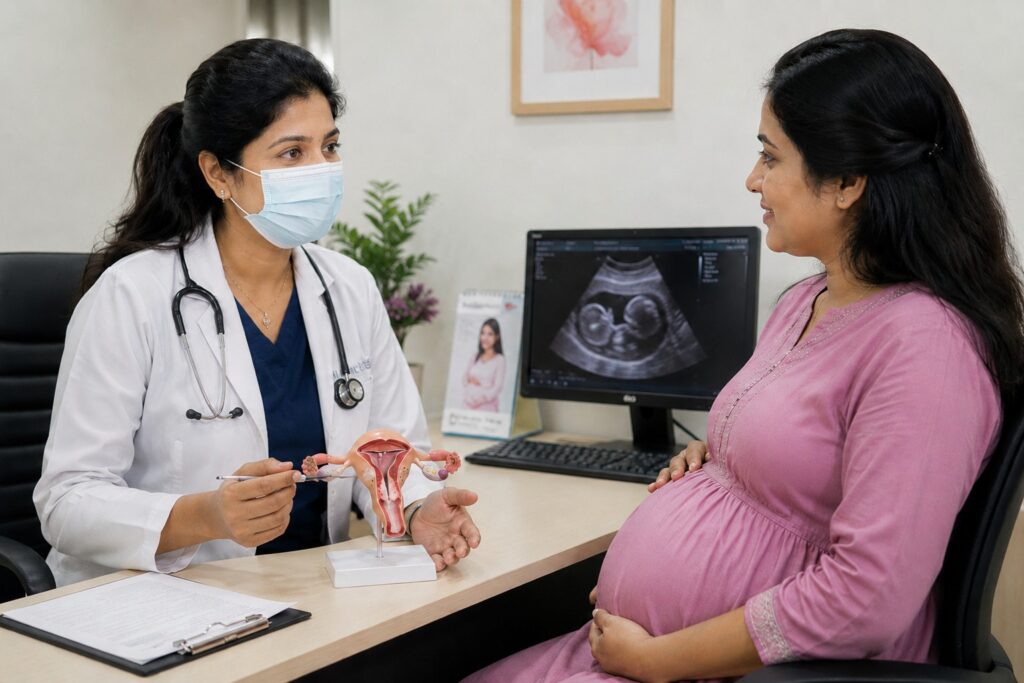

The last weeks of pregnancy are a mix of excitement and nerves. Will I recognise labour? When do I leave for the hospital? Will I need a cesarean? How much will it hurt? Every expectant mother asks these questions, and the best answer to fear is information. Knowing what to expect, and having a doctor who explains things clearly, makes the day itself far calmer.
This guide covers the signs of true labour, when to leave for the hospital, the stages of birth, pain relief, how the choice between normal and cesarean delivery is made, and what to pack. Whether you are searching for a Gynecologist in Pimple Saudagar or elsewhere in the twin cities, it will help you ask the right questions before your due date.
True Labour or False Labour?
| Feature | True labour | False labour (Braxton Hicks) |
|---|---|---|
| Timing | Regular and getting closer together | Irregular and not getting closer |
| Strength | Gets stronger and longer over time | Stays mild or fades |
| Effect of movement | Continues despite rest, walking or a change of position | Often eases with rest, water or a change of position |
| Where you feel it | Starts in the back and wraps to the front | Mostly in the front of the abdomen |
| Other signs | Bloody show, leaking fluid, baby dropping lower | None of these |
When to Go to the Hospital
Time your contractions
A common guide is the 5-1-1 rule: contractions about five minutes apart, each lasting about a minute, for an hour. Your doctor may advise leaving earlier if you live far away or have a special condition.
Go straight away if
- Your water breaks, especially if the fluid is green, brown or foul-smelling
- You have bleeding heavier than spotting
- Your baby is moving much less than usual
- You have severe constant pain, a severe headache or blurred vision
- You have labour signs before 37 weeks
The Three Stages of Labour
Stage 1: Opening
The cervix gradually opens, from the early phase of mild contractions to active labour and the intense transition. This is the longest stage, often twelve hours or more in a first labour.
Stage 2: Pushing
Once the cervix is fully open, you push with contractions and your baby is born. It can last from a few minutes to a couple of hours.
Stage 3: The placenta
The placenta is delivered, usually within about half an hour, and the doctor checks that bleeding is under control.
Managing Labour Pain
- Without medicines: slow breathing, walking and changing positions, a warm shower, back massage and a calm companion beside you.
- Medical options: pain-relieving injections and epidural analgesia, where available, which relieves pain while you stay awake.
- Prepare in advance: antenatal classes teach breathing and positions, and discussing pain relief beforehand avoids confusion on the day.
- Stay flexible: what you choose early on can change as labour progresses, and that is completely fine.
Normal Delivery or Cesarean: How the Decision Is Made
Vaginal (normal) delivery
- Usually preferred when it is safe for mother and baby
- Shorter hospital stay and quicker recovery
- Lower risk of surgical complications
- Possible tears or stitches, and pelvic floor care afterwards
Cesarean delivery
- A life-saving option when labour is unsafe or not progressing
- Planned in advance or decided during labour
- Longer recovery of about six to eight weeks
- Major surgery with its own risks, so not an “easier” option
A cesarean is commonly advised when there are signs the baby is in distress, labour is not progressing, the baby is in an unsuitable position, the placenta covers the cervix, or the mother has certain serious conditions. Many women who have had one earlier cesarean can safely attempt a vaginal birth in a well-equipped hospital, a decision your doctor will help you make. Induction of labour may be advised if the pregnancy is well beyond the due date or if conditions like high blood pressure or diabetes make waiting riskier.
A trustworthy doctor explains the reasons behind every recommendation, so you understand why a particular route is safest for you and your baby.
Conditions That Shape Your Delivery Plan
- Gestational diabetes, high blood pressure or pre-eclampsia, and thyroid disease
- Anaemia, which should be corrected well before delivery
- Twins or a baby in a breech (bottom-down) position
- A low-lying placenta, or a previous cesarean or uterine surgery
- Slow growth of the baby or reduced amniotic fluid
Having one of these does not automatically mean a cesarean. It means closer monitoring and a carefully chosen plan, made early rather than in a hurry. If any of these apply to you, look for the Best Gynaecologist in PCMC who will explain your options clearly and plan your delivery well before your due date.
Hospital Bag Checklist
For you
- Loose, front-opening clothes and a nursing bra
- Maternity pads and comfortable underwear
- Toiletries, slippers and a phone charger
- Snacks and a water bottle
For the baby
- Soft cotton clothes, caps and mittens
- Diapers and wipes
- Receiving blankets and a going-home outfit
- A properly fitted car seat, if travelling by car
Documents
- Identity proof and hospital registration papers
- Antenatal records, scans and test reports
- Insurance papers, if applicable
- Your doctor’s contact numbers
The First Hour After Birth
- Skin-to-skin contact with your baby helps warmth, bonding and the start of breastfeeding.
- Breastfeeding is encouraged within the first hour if you and your baby are well.
- Ask whether delayed cord clamping, usually for a minute or so, is possible for a healthy baby.
- The baby’s first checks, vitamin K and birth vaccines are done soon afterwards.
- You will be monitored for bleeding, blood pressure and pain relief before moving to the ward.
How to Choose the Gynecologist in Pimple Saudagar
For delivery, choose a doctor whose approach and availability you trust. Ask about:
- Delivery philosophy: do they encourage a normal delivery when it is safe, and explain clearly when a cesarean is truly needed?
- Availability: who attends your delivery, and who is the backup if your doctor is unavailable?
- Emergency readiness: which hospital will you deliver in, and does it have round-the-clock theatre and newborn care?
- Clear costs: what is included in the package and what could change it?
- Postnatal support: breastfeeding help, follow-up visits and the six-week checkup.
Why Patients Trust Dr. Avinash Phadnis
Dr. Avinash Phadnis is known for patient, unhurried antenatal consultations in which every question is welcomed and every recommendation is explained. Expectant mothers value the honest discussion of normal delivery, cesarean and the reasons behind each, so they feel involved in their own care instead of being told what will happen.
His practice follows women from the first antenatal visit to postnatal recovery, and covers high-risk pregnancy monitoring and fertility care as well. This continuity and clear communication is why many families across the twin cities describe him as a doctor they can rely on for dependable, compassionate care.
Final Takeaway
A calm delivery begins long before the first contraction. Learn the signs of labour, discuss your birth plan and any risks early, keep your bag and documents ready and choose a doctor who explains the reasons behind every decision. Flexibility matters more than any plan on paper, because the safest birth is the one that puts you and your baby first.
If you are expecting, consult the Best Gynecologist in PCMC for Pregnancy and approach your due date with confidence and clear guidance.
Book Your Consultation with Dr. Avinash Phadnis
Book AppointmentFrequently Asked Questions
How do I know I am in real labour?
True labour contractions come at regular intervals, get closer together, stronger and longer, and do not ease with rest or a change of position. They are often felt in the back and lower abdomen, and may come with a bloody show or leaking fluid.
When should I go to the hospital?
Go when contractions are about five minutes apart, lasting about a minute, for an hour, or earlier if your doctor has advised. Go immediately if your water breaks, you have bleeding, baby moves less, you have severe constant pain, or you are before 37 weeks with labour signs.
Can I choose a cesarean delivery?
A vaginal delivery is usually preferred when it is safe, as recovery is faster and future pregnancies are generally easier. A cesarean is recommended when there are medical reasons. If you are considering one without a medical need, discuss the benefits and risks openly with your doctor.
Is normal delivery very painful?
Labour is intense, but pain is different for every woman. Breathing techniques, movement, a supportive companion, warm water and medical pain relief such as epidural analgesia, where available, can make it much more manageable.
Can I have a normal delivery after a cesarean?
Many women who have had one previous cesarean can safely try a vaginal birth after cesarean (VBAC), in a hospital equipped for emergencies. Your doctor will assess the previous scar, the reason for the earlier cesarean and your current pregnancy.
How long does labour last?
It varies widely. A first labour often lasts twelve hours or more, while later labours are usually shorter. Most of the time is spent in the early phase, when contractions are still mild and you can rest at home.
What is induction of labour?
Induction means starting labour with medicines or other methods when continuing the pregnancy carries more risk, for example when you are well past your due date, have high blood pressure or diabetes, or your waters have broken without contractions.
How long is recovery after a cesarean?
Most women stay in hospital for around three to four days and need about six to eight weeks to recover fully. Avoid heavy lifting, keep the wound clean and dry, and report fever, redness, discharge or heavy bleeding.
How can I book an appointment with Dr. Avinash Phadnis?
Use the Book Appointment button above to open the clinic’s Google Business profile, where you can call or get directions and choose a convenient time.